.webp "Surety Bond vs Bank Guarantee Key Differences in 2026")
 Admin
Admin
 21-08-2026
 Surety & Financial Guarantees
1. confirm the contractor genuinely defaulted under contract terms
2. issue a formal written default notice to the Principal
3. submit a written claim notice with documentation to the surety insurer
4. cooperate with the insurer's investigation
5. receive payment up to the bond amount if the claim is validated.
Unlike a bank guarantee, surety bond claims are conditional — the IRDAI-licensed insurer investigates before paying.
You've been awarded a contract. You required the contractor to furnish a surety bond. They did. And then they defaulted work stopped, timelines collapsed, and the project is in trouble.
Now the question is: how do you actually get paid under that bond?
Claiming a surety bond in India is not the same as invoking a bank guarantee. A bank guarantee pays on demand you present it, the bank pays. A surety bond works differently. The IRDAI-licensed insurer investigates the claim before paying. That investigation is not a roadblock it's a feature of the product. But it does mean the claim process has specific steps, documentation requirements, and timelines that must be followed correctly for a valid claim to be honoured.
This guide walks through the complete surety bond claim process in India from confirming default to receiving payment with clear guidance on documentation, common rejection reasons, and what to do if a claim is disputed.
A surety bond A surety bond is a contract between three parties. In India, it is specifically governed by IRDAI (Surety Insurance Contracts) Guidelines 2022. The three parties are:
In the event of default by the Principal, the Obligee makes a claim against the Surety. The insurer will investigate to determine if the default is valid and covered by the terms of the bond. If so, the insurer will pay out, up to the bond amount. The insurer will then seek reimbursement from the Principal under a counter indemnity agreement.
In contrast, a bank guarantee typically works where the bank will pay on demand unconditionally. With a surety bond, the insurer has the right to investigate and validate the claim. Because of this, having the proper structure and compliance is crucial.
NOTE: IRDAI (Surety Insurance Contracts) Guidelines 2022 are the regulatory guidelines that all surety bonds issued by Indian general insurers must adhere to. Each bond has its own wording that outlines the claim process. Please review the bond itself before proceeding with a claim.

Filing a Surety Bond claim in India requires following the correct process, from checking the bond terms and gathering supporting documents to notifying the surety company and submitting the claim. Understanding each step can help avoid unnecessary delays and improve the chances of a smooth claim assessment.
Follow these steps in sequence. Skipping a step or getting the order wrong is one of the most common reasons claims are delayed or disputed.
The process normally begins when the Principal, such as a contractor, fails to meet an important contractual obligation. This may include missing a major deadline, failing to complete the work, or not meeting the agreed quality or performance standards.
If the Obligee believes the default is serious enough to be covered by the bond, it sends a formal claim or notice to the insurer. The notice usually explains the breach, provides supporting documents, and states the amount being claimed.
After receiving the claim, the insurer normally confirms receipt and may provide a claim reference number. The Obligee should keep this number and copies of all correspondence for future communication regarding the claim.
The insurer then checks the surety bond terms, underlying contract, notices, invoices, project records, and other supporting evidence. Depending on the case, it may also appoint an expert, surveyor, loss assessor, or technical professional to verify the facts.
The insurer may contact the Principal and ask for its version of events. The Principal may show that the alleged breach did not occur, explain the circumstances, provide supporting evidence, or in some cases take steps to correct the default.
After reviewing both sides, the insurer decides whether the claim is covered under the bond. A valid claim may be accepted fully or partly, while a claim may also be disputed if it does not meet the bond conditions. Some disputes may be resolved through negotiation, arbitration, or another method stated in the bond.
If the claim is approved, the insurer pays the Obligee according to the bond terms, generally up to the maximum bond amount. The Obligee may then use the payment to cover eligible losses arising from the Principal's default.
Payment by the insurer does not necessarily end the Principal's responsibility. Under the indemnity agreement connected with many surety bonds, the insurer may seek reimbursement from the Principal for amounts paid under the claim, along with applicable costs or other amounts permitted under the agreement.
In simple terms, the surety bond claim process moves from a contractual default to formal invocation, investigation, response from the Principal, a claim decision, payment to the Obligee, and finally possible recovery by the insurer from the Principal.
Also Read: Surety Bond vs Bank Guarantee: Key Differences
Documentation is where most claims succeed or fail. The insurer needs to independently verify the default which means your evidence must be specific, dated, and clearly connected to the contract terms that were breached.
Signed contract between Principal and Obligee including scope, timelines, and default provisions
Copy of the formal written notice served on the Principal specifying the breach
All written communication between Obligee and Principal regarding the breach and remediation attempts
Always provide originals or certified copies rather than informal photographs or scans. If the bond wording specifies particular forms or certificates, include those exactly as required the insurer is entitled to reject documentation that doesn't match what the bond specifies.
After submitting a Surety Bond Claim, the surety company reviews the claim, supporting documents, and bond terms. The insurer may investigate the circumstances and contact the involved parties for clarification. If the claim is found valid, compensation may be processed according to the bond conditions and applicable legal requirements.
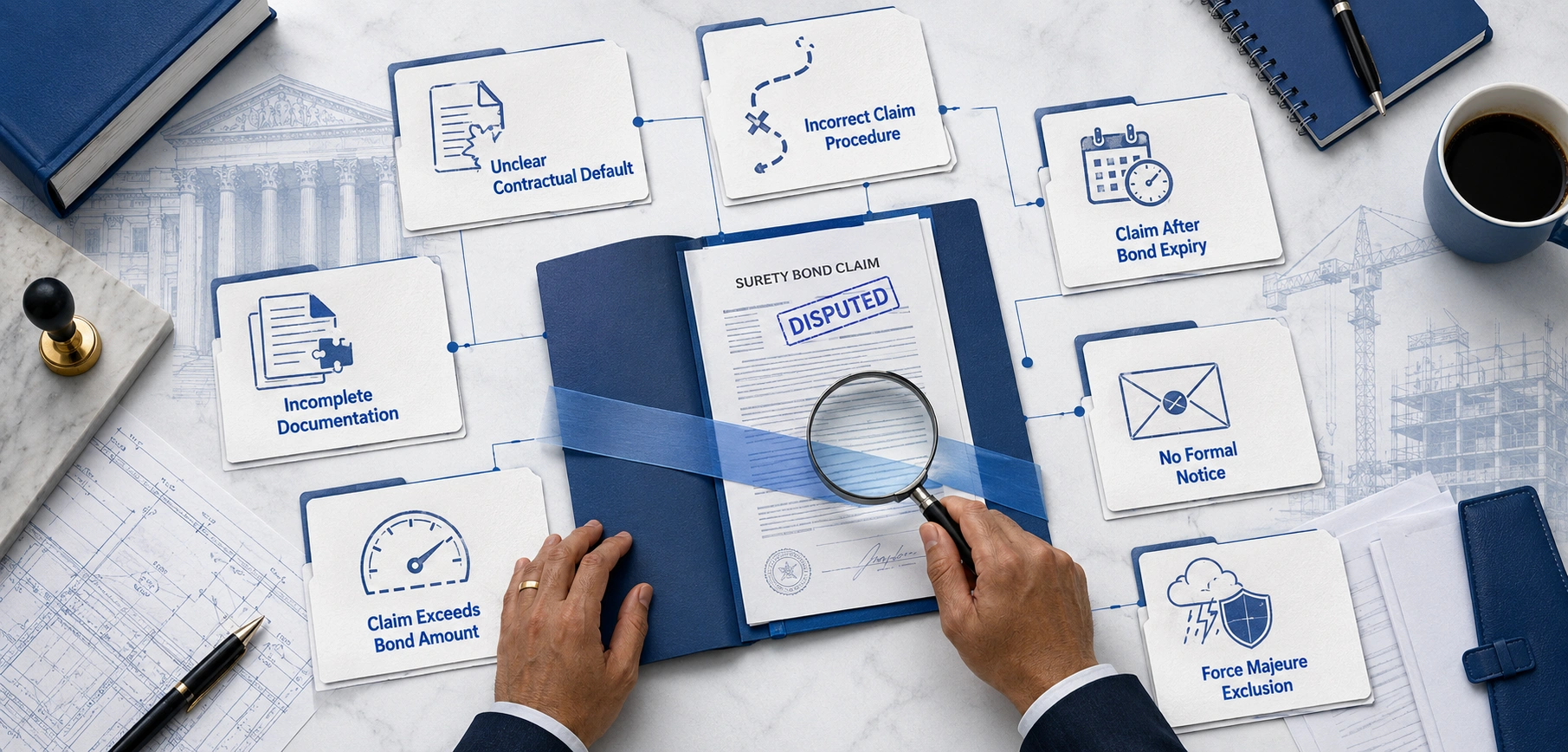
The single most preventable cause of claim rejection: not reading the bond document carefully before initiating the claim. The bond wording tells you exactly what the insurer needs and when. Follow it precisely.
Many project owners approach surety bonds with the same expectations as bank guarantees and find the process different. Here's why:
The conditional nature of surety bonds is not a disadvantage, it protects against premature or fraudulent claims and produces more commercially fair outcomes. But it does require more structured documentation compared to invoking a bank guarantee.
Note: For contractors (Principals): if you believe a claim against your surety bond is incorrect or premature, engage with the insurer immediately. The investigation stage is your opportunity to present your case before payment is made unlike a bank guarantee where payment happens before any dispute can be raised.
Also read: Surety Bond vs Bank Guarantee: Key Difference
If the insurer disputes or rejects your claim, your options depend on the bond wording and the nature of the dispute:
Don't ignore a dispute or assume it resolves itself. Surety bond disputes have defined timelines, and missing them can affect your ability to recover.
A surety bond claim requires the right documentation, timely notice, and compliance with IRDAI guidelines. The License Hub provides end-to-end support—from eligibility checks and document review to claim guidance and follow-ups—so your claim process is smooth and hassle-free.
Get in touch with The License Hub today.
Claiming a surety bond in India is a structured process not a complicated one, as long as you follow the right steps in the right order with the right documentation.
The key difference from a bank guarantee is that the insurer investigates before paying. That investigation ensures claims are genuine, disputes are resolved fairly, and both sides of the bond relationship are treated commercially.
Read your bond document before a default occurs. Understand what constitutes a valid default under that specific bond. Know the claim procedure and documentation requirements. When default does happen, act quickly timelines in bond wordings matter, and delays in notification can affect claim validity.
Get those things right, and a surety bond claim is a straightforward path to recovery.
To claim a surety bond in India, the Obligee confirms genuine default, serves a written default notice to the Principal, submits a formal claim notice with supporting documentation to the surety insurer, cooperates with investigation, and receives payment up to the bond amount if the claim is validated under IRDAI-regulated bond terms.
No. A bank guarantee is unconditional the bank pays on demand without investigating the underlying dispute. A surety bond claim is conditional the IRDAI-licensed insurer investigates the claimed default, reviews documentation, and pays only after validating that the breach falls within bond coverage.
You need the original bond document, the underlying contract, written evidence of default, the formal default notice served to the Principal, a financial loss assessment, all relevant correspondence, and payment records. The specific bond wording may require additional certificates always follow what the bond document specifies.
The surety bond only covers losses up to its face value the bond amount is the insurer's maximum liability. If actual losses exceed the bond value, the difference is not covered by the bond and must be pursued separately against the defaulting Principal through legal proceedings or arbitration.
Timelines vary by insurer, bond type, and complexity of the default. Simple, well-documented claims with clear evidence can resolve in 30 to 90 days. Complex cases involving contested defaults, site assessments, or disputed quantum may take longer. Following the correct claim procedure from the start significantly reduces delays.
Review the rejection reason carefully if it is a documentation issue, supplement and resubmit. If the dispute is substantive, check the bond wording for the dispute resolution mechanism (typically arbitration). Consult a legal advisor with surety and insurance experience, and preserve all evidence and records for the dispute process.
